Hey folks, sorry about the absence of me on this blog. I have been so busy with school video games have just not been on my mind lately. Within the next week I should have a full review of South Park: Stick of Truth up. Please give it a read and hopefully we can bring this blog back to life.
Saturday, March 29, 2014

Tuesday, January 28, 2014
[XJ] [OST Review] Touhou 11: Subterranean Animism - 9/10
So, for my first full OST review I chose to do a game that is actually quite new to my own personal gaming roster. In fact, I was first introduced to the Touhou series only about three months ago... Despite this, however, the series has quickly become a personal favorite of mine, with excellent gameplay, engaging in-universe lore, and of course, absolutely fantastic music.
The Touhou series made its first release in 1996, and has since seen fourteen main series games, with another seven on the side. With so many titles, Touhou is obviously a very well established series with an extensive catalog of core characters, with many more supporting as well. Interestingly enough, I should add, is that almost every character that's encountered is female. Not a bad thing if you ask me!
Anyways, the particular game I happen to be reviewing is the eleventh main series game: Subterranean Animism. Released in 2008, it is without a doubt the most challenging game in the entire series. In fact, many would claim that it may be one of the most challenging games in the entire genre! This would be saying a lot, considering that curtain-fire shooters are among the most challenging styles of games out there.
In conjunction with it's highly-challenging nature, this game also sports a very tense atmosphere. Between the difficulty, plot, visuals, and music, this game is incredibly immersive. It is a very good representation of delving deep into the Earth and having magical danmaku battles with the twisted creatures of the underground.
Like most games, it would be overbearingly tedious and impractical to go into detail on every single song in the entire game, but due to the structure of the gameplay, I will be able to go through the vast majority of them. With the simple pattern of stage-boss-stage-boss-etc..., I will go through each stage and each boss theme in detail. Other minor additions to the overall soundtrack will be overlooked. Clicking the titles will redirect you to each song, so I encourage you to check them out as you read.
Stage 1 Theme: The Dark Blowhole
I must say right off the bat, this is an excellent way to start out this game. The song is not to heavy or intense, so it fits well as a Stage 1 theme. But, at the same time, it is still very atmospheric and immersive. You are just now delving into the underground; you are not very deep just yet, but you are still beneath the surface of the Earth.
For most of the song, the drums give it a very driven feeling. It's early on in the heroine's adventure, and a lot of the initial energy and stamina remains. But, at the same time, the bass reminds you that you are indeed still in a cave. It gives enough of a dark feeling as to still induce a mild sense of claustrophobia. As the song progresses, slightly more bright sounding tones get thrown in, as well as some higher pitches. This helps to even better balance the feeling of initial energy and excitement with the dissonance of being underground.
First Boss Theme: The Sealed Away Youkai ~ Lost Place
Not too far into her journey, the heroine encounters her first major enemy: Yamame Kurodani. She is an Earth Spider, despite not really appearing to be such a creature. She is a youkai who has the ability to manipulate illnesses, particularly infectious disease. Because of this, she was sealed away in the underground. As the heroine ventures deep enough into her cave, she attacks. Thus, initiating the first boss battle.
It is a bit more fast paced than the stage theme, but loses most of its dark atmosphere. It's all about energetic battling. Personally, I don't think this is the best theme that could be used in such a situation. It is a decent
stand-alone song for a first boss, but considering the particular game that it appears in, it is a little too fast and bright to be perfectly suitable.
Stage 2 Theme: The Bridge People No Longer Cross
Deeper, deeper you delve into the depths of the underground. The music slows, and loses any semblance of brightness and optimism that may have been conveyed in the previous music. You are now deep enough that there is no turning back, and you must face whatever twisted creatures you find head-on.
Seriously, this is one of my favorite stage themes in the entire series. It is so dark and soulful, and few compositions can even match its atmosphere. The slow tempo really conveys the feeling of being sufficiently deep in a dark, dank cave far beneath the surface of the Earth. In fact, the feel of the song gets even slower and darker as it goes on, eventually summounting into very slow, deep, and drawn out notes. At this point, the song becomes so somber that it's almost as if all hope of returning to the surface has been lost. This coincides nicely with the fact that enemies are becoming progressively stronger as you journey farther and farther from the surface world.
Second Boss Theme: Green-Eyed Jealousy
Finally, you reach the bridge that leads into the deeper parts of the Underworld. As you attempt to cross, however, you are attacked by the keeper of said bridge: Parsee Mizuhashi. Due to being so incredibly despised, she has grown to harbor an extreme jealousy of everyone else, regardless of their situation. After having these feelings for so long, she has actually gained the power to manipulate jealousy in others.
Her theme continues on somewhat of a somber note, although it's three-count timing gives a bit more of a driven feeling than the stage theme. Also in opposition to the stage theme, it gradually feels faster and more energetic with time. I suppose such a feeling is a bit more suitable for a boss battle.
The song does however still retain enough of a dark and sad atmosphere as to still convey the feeling of being underground, and battling a girl with a very broken morale. So all in all, the theme is still quite fitting despite its slightly energetic pace.
Stage 3 Theme: Walking the Streets of a Former Hell
After crossing Parsee's bridge into Former Hell, the heroine arrives in what is now simply known as the 'Former Capital'. It is an underground village populated primarily by Oni who went there in order to contain the evil spirits of the Underworld. In contrast to the past two stages, it is not just a dark, gloomy cave, but is actually a center of civilization.
As such, the theme is quite a bit faster than the previous stage theme. Also, it's quite a bit more energetic, conveying the feeling that there's more to this area than just rocks and malicious creatures. In fact, it is energetic enough to demonstrate the party-loving spirits of the Oni who live in the village.
In spite of breaking the deep, dark, and claustrophobic nature of the game leading up to this point, the extra dynamics this song adds is actually quite refreshing. It also works well with the faster-paced nature of this particular stage. If it were as slow as the Stage 2 theme, it just wouldn't fit at all.
Third Boss Theme: A Flower-Studded Sake Dish on Mt. Ooe
Somewhere in the village, the heroine encounters Yuugi Hoshiguma, an Oni with a love of all things strong and brave, and no mercy for the weak and cowardly. Impressed by the heroine's strength, she decides to help them if they can beat her in a fight.
This theme is very lighthearted compared to the rest of the music in the game. It's very upbeat and almost happy, and contrasts greatly with some of the other themes. Although, it does indeed fit with the situation; you're battling someone who doesn't seem to have any sort of actual malicious will towards you, but is still immensely powerful and challenging.
Overall, however, this theme is hardly notable. There's nothing bad about it, but it just doesn't seem to grab me very well.
Stage 4 Theme: Heartfelt Fancy
After defeating Yuugi, she willingly directs you to the Palace of Earth Spirits. It is a mansion in the center of what was formerly Hell. As the song title implies, the mansion is quite fancy indeed. The song itself is also sufficiently regal and serves as a very appropriate accompaniment.
The theme is neither too fast or too slow; it carries along at a fairly moderate tempo. It is not all that bleak, but it does have a very solemn air to it. You'd better believe this song means business, but in the most high-class way possible.
Fourth Boss Theme: Satori Maiden ~ 3rd Eye
The fancy aura of the stage theme is certainly carried over to the boss theme, as well. It's very regal and ornate, but at the same time, it gains quite a bit of energy compared to the stage theme. High energy themes are of course always preferred for fighting a boss characters, so this is a good quality without a doubt.
As the song carries on, it gets a little more abrasive. It starts to kind of dig in to you, but at the same time is still able to maintain some of its original feel. The character whom it represents is a legendary youkai named Satori Komeiji who has the terrifying ability to read the minds and memories of her opponents, so the fear that this should incite is embodied quite nicely in the later measures of the composition.
Stage 5 Theme: Lullaby of a Deserted Hell
After being defeated, Satori will direct the heroine into the Palace's courtyard in order to find the root of the incident. In the courtyard is a hole that leads directly into the Remains of Blazing Hell; a segment of Former Hell that was once used to contain banished criminals.
All that surrounds you is blazing fires and the projectiles of enemies... The rest is utter desolation. The only sounds to be heard at first are the subterranean winds, as the heroine is greeted with her first wave of enemies. After weaving through the extremely dense field of initial projectiles, a very slow, sad, and lonely sounding song begins to play. It is choreographed EXCELLENTLY with what is going on in the actual game at this point. The initial windy sound effects amplify the tension of the first waves so much, it is almost overwhelming. It is definitely one of the most intense points in the entire game...
But then, when the actual music begins to play, there is a massive release from the tension. It is an interesting feeling. The early stages of the song are very soft and lighthearted; it is a little bit contrasting to the atmosphere of the actual stage. But at the same time, it's slow tempo matches the pacing of the level very well. It is slow, drawn out, and very dense, just like everything else that is going on.
As you get deeper in, however, the mood of the song begins to grow even more and more tense. By the middle sections, it gets so incredibly dark and solemn that I can hardly even express how it feels. At this point in the level, you are having to weave through very wide and complicated zig-zags, and despite the slowness of the song, it couldn't fit more perfectly. Plus, despite the slow tempo, there is some faster bass parts being played in the background. Something about it just gives off the most perfect feeling of descent... You are in some of the deepest depths of Hell, and are continuing to go even deeper into the blazing fires. It's so intense that there's this sort of solemn beauty to it. It's probably the most amazing and awe-inspiring feeling I've ever felt in ANY video game.
As the song progresses from that point, it begins to slowly wind down. Eventually, it reaches a very organic end as it dies down into the sounds of the wind once more. At the time you can hear the wind again, no more enemies approach you, except for one...
Fifth Boss Theme: Corpse Voyage ~ Be of Good Cheer!
Out from the blazing fires of Hell, a familiar and seemingly minor character reveals her true form: Rin Kaenbyou, a kasha in charge of carrying corpses in her wheelbarrow that are to be used for the heating of Hell.
The song begins immediately with a dissonant slide the moment that she phases into her more humanoid form. The perfect aural accompaniment to her sudden and unexpected transformation. The rest of the song afterwards, however, is not very tense, much unlike the stage theme. But at the same time, there is a certain epicness to it. It's not overbearing, though; you've come very far along this journey, overcame many challenges, but it is not over quite yet. The final trial still lays ahead, but it is still close enough that its gravity is still palpable at this point. A very good second-to-last Boss theme.
Final Stage Theme: Hellfire Mantle
Oh God. Oh DEAR GOD. If you have not felt any sort of fear, tension, or anxiety leading up to this point in the game, I'm certain that you will feel something of that sort right about now. These are the final moments leading up to the most intense battle that you will probably ever have in any video game you ever play.
The driving, epic procession drives you through the deepest depths of Former Hell as you approach the final boss. Not much more is to be said, but, this is the most perfect theme for a final stage that I have ever heard. Hot damn.
Final Boss Theme: Solar Sect of Mystic Wisdom ~ Nuclear Fusion
This is the moment that the entire game has been leading up to. The ultimate trial of skill at the hands of Utsuho Reuji, a hell raven with the power to control nuclear fusion.
There a lot of breaks throughout the song that really amplifies the intensity of what's being played, and what's going on in the game. It's very dynamic, and fits very naturally with the feel of battle. But, even just the gravity of each individual part is enough to portray the absolute severity of this fight.
This is an excellent song to close the journey with. It is a pinnacle of the ultimate, tense madness that should be required of every final boss theme ever composed, and is elevated even farther in status by the fact that it is the most important song on a legendarily challenging game. This really is the crown of the entire game. Beware its intensity.
...
On top of these six regular levels, Subterranean Animism (as well as most other games in the series) contains one extra stage that is unlocked upon clearing the rest of the game without using any continues (or 'extends', as they are referred to in this game).
Extra Stage Theme: Last Remote
This is probably the most fitting song in the game for representing the darkness and claustrophobia of being underground. Ironically, however, this is the one stage where you are not underground at all! Interestingly enough, you are at a shrine instead.
It starts out very atmospheric, instilling a sense of utter confinement in the listener. But at the same time, there are a lot of high-pitched, almost beep-like notes being played fast. This gives the song an almost alien feel. As the song continues, there is a lot of build-up, ultimately resulting in a somewhat melancholy melody. The mood of said melody is somewhat altered, however, because the pacing of the accompanying music is too fast to be remotely melancholy, giving the song a very intriguing at ambivalent air.
But, while this is an excellent song (one of the best in the series, in fact), it just does not fit with the actual stage. It is a bit disappointing in a sense, but at the same time, it's such a great song that it's easy to overlook this fact. Oh well. Everything can't be perfect, after all!
Extra Stage Boss Theme: Hartmann's Youkai Girl
In the shrine, you encounter none other that Satori's sister, Koishi. Like Satori, Koishi technically has the power to read the thoughts and memories of others, but, to avoid the loathing that Satori is subject to due to her ability, she has shut her third eye. This has caused her to essentially be blocked off from her own conscious mind, and thus, she has no detectable personality to those who encounter her.
Her theme is very... Enigmatic. It oscillates between many styles and voices without much of a coherent theme. Despite this, it is actually very well done, so all these strange features cause it to be intriguing rather than just annoying.
One thing to keep in mind about battling Koishi, is that defeating her takes a VERY long time. As Utsuho was the ultimate trial of skill, Koishi is the ultimate trial of stamina. That being said, the plethora of different passages in the song is even more of a high point, considering that you will be listening to it for quite a while. It does a very good job of staying interesting for an extended period of time compared to other looping videogame songs that would just get repetitive after the amount of time it takes to defeat her.
...
Overall, Subterranean Animism has one of the best videogame soundtracks I've ever heard. Although it has its weak points, its strong points more than compensate for them. The combination of the style of music and setting of the game produces one of the most atmospheric and immersive gaming experiences I've ever encountered.
Even if you aren't a huge fan of curtain-fire shooters, I would still highly recommend that you check out the Touhou series. Maybe it would be enough to get you hooked on the genre. Besides, there are other types of games in the series. There are currently four Street Fighter/Mortal Kombat/etc... style fighting games out, as well.
However, I advise that you not start with Subterranean Animism if you do decide to check Touhou out, unless you are very experienced with other games of this genre. If you are still a beginner to this type of game, I would recommend Mountain of Faith (number ten), or Imperishable Night (number eight) as a much better starting point. But, I suppose you could still try this first if you feel so compelled. If you're looking for a challenge, it's not a bad idea!
If you own the rights to any content that appears in this article, and would like it to be removed, contact me at xenogzus@gmail.com and voice your concern. I will happily comply with any reasonable demands regarding the removal of said content.
The Touhou series made its first release in 1996, and has since seen fourteen main series games, with another seven on the side. With so many titles, Touhou is obviously a very well established series with an extensive catalog of core characters, with many more supporting as well. Interestingly enough, I should add, is that almost every character that's encountered is female. Not a bad thing if you ask me!
Anyways, the particular game I happen to be reviewing is the eleventh main series game: Subterranean Animism. Released in 2008, it is without a doubt the most challenging game in the entire series. In fact, many would claim that it may be one of the most challenging games in the entire genre! This would be saying a lot, considering that curtain-fire shooters are among the most challenging styles of games out there.
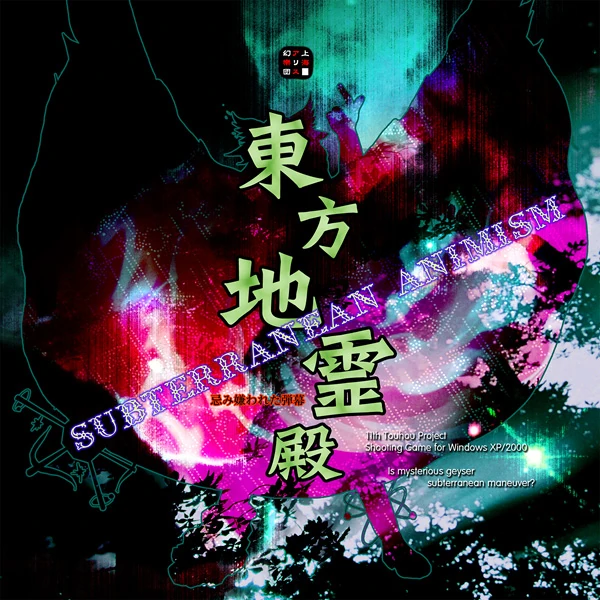 |
| Cover art |
Like most games, it would be overbearingly tedious and impractical to go into detail on every single song in the entire game, but due to the structure of the gameplay, I will be able to go through the vast majority of them. With the simple pattern of stage-boss-stage-boss-etc..., I will go through each stage and each boss theme in detail. Other minor additions to the overall soundtrack will be overlooked. Clicking the titles will redirect you to each song, so I encourage you to check them out as you read.
Stage 1 Theme: The Dark Blowhole
I must say right off the bat, this is an excellent way to start out this game. The song is not to heavy or intense, so it fits well as a Stage 1 theme. But, at the same time, it is still very atmospheric and immersive. You are just now delving into the underground; you are not very deep just yet, but you are still beneath the surface of the Earth.
For most of the song, the drums give it a very driven feeling. It's early on in the heroine's adventure, and a lot of the initial energy and stamina remains. But, at the same time, the bass reminds you that you are indeed still in a cave. It gives enough of a dark feeling as to still induce a mild sense of claustrophobia. As the song progresses, slightly more bright sounding tones get thrown in, as well as some higher pitches. This helps to even better balance the feeling of initial energy and excitement with the dissonance of being underground.
 |
| Yamame Kurodani |
Not too far into her journey, the heroine encounters her first major enemy: Yamame Kurodani. She is an Earth Spider, despite not really appearing to be such a creature. She is a youkai who has the ability to manipulate illnesses, particularly infectious disease. Because of this, she was sealed away in the underground. As the heroine ventures deep enough into her cave, she attacks. Thus, initiating the first boss battle.
It is a bit more fast paced than the stage theme, but loses most of its dark atmosphere. It's all about energetic battling. Personally, I don't think this is the best theme that could be used in such a situation. It is a decent
stand-alone song for a first boss, but considering the particular game that it appears in, it is a little too fast and bright to be perfectly suitable.
Stage 2 Theme: The Bridge People No Longer Cross
Deeper, deeper you delve into the depths of the underground. The music slows, and loses any semblance of brightness and optimism that may have been conveyed in the previous music. You are now deep enough that there is no turning back, and you must face whatever twisted creatures you find head-on.
Seriously, this is one of my favorite stage themes in the entire series. It is so dark and soulful, and few compositions can even match its atmosphere. The slow tempo really conveys the feeling of being sufficiently deep in a dark, dank cave far beneath the surface of the Earth. In fact, the feel of the song gets even slower and darker as it goes on, eventually summounting into very slow, deep, and drawn out notes. At this point, the song becomes so somber that it's almost as if all hope of returning to the surface has been lost. This coincides nicely with the fact that enemies are becoming progressively stronger as you journey farther and farther from the surface world.
 |
| Parsee Mizuhashi |
Finally, you reach the bridge that leads into the deeper parts of the Underworld. As you attempt to cross, however, you are attacked by the keeper of said bridge: Parsee Mizuhashi. Due to being so incredibly despised, she has grown to harbor an extreme jealousy of everyone else, regardless of their situation. After having these feelings for so long, she has actually gained the power to manipulate jealousy in others.
Her theme continues on somewhat of a somber note, although it's three-count timing gives a bit more of a driven feeling than the stage theme. Also in opposition to the stage theme, it gradually feels faster and more energetic with time. I suppose such a feeling is a bit more suitable for a boss battle.
The song does however still retain enough of a dark and sad atmosphere as to still convey the feeling of being underground, and battling a girl with a very broken morale. So all in all, the theme is still quite fitting despite its slightly energetic pace.
Stage 3 Theme: Walking the Streets of a Former Hell
After crossing Parsee's bridge into Former Hell, the heroine arrives in what is now simply known as the 'Former Capital'. It is an underground village populated primarily by Oni who went there in order to contain the evil spirits of the Underworld. In contrast to the past two stages, it is not just a dark, gloomy cave, but is actually a center of civilization.
As such, the theme is quite a bit faster than the previous stage theme. Also, it's quite a bit more energetic, conveying the feeling that there's more to this area than just rocks and malicious creatures. In fact, it is energetic enough to demonstrate the party-loving spirits of the Oni who live in the village.
In spite of breaking the deep, dark, and claustrophobic nature of the game leading up to this point, the extra dynamics this song adds is actually quite refreshing. It also works well with the faster-paced nature of this particular stage. If it were as slow as the Stage 2 theme, it just wouldn't fit at all.
 |
| Yuugi Hoshiguma |
Third Boss Theme: A Flower-Studded Sake Dish on Mt. Ooe
Somewhere in the village, the heroine encounters Yuugi Hoshiguma, an Oni with a love of all things strong and brave, and no mercy for the weak and cowardly. Impressed by the heroine's strength, she decides to help them if they can beat her in a fight.
This theme is very lighthearted compared to the rest of the music in the game. It's very upbeat and almost happy, and contrasts greatly with some of the other themes. Although, it does indeed fit with the situation; you're battling someone who doesn't seem to have any sort of actual malicious will towards you, but is still immensely powerful and challenging.
Overall, however, this theme is hardly notable. There's nothing bad about it, but it just doesn't seem to grab me very well.
Stage 4 Theme: Heartfelt Fancy
After defeating Yuugi, she willingly directs you to the Palace of Earth Spirits. It is a mansion in the center of what was formerly Hell. As the song title implies, the mansion is quite fancy indeed. The song itself is also sufficiently regal and serves as a very appropriate accompaniment.
The theme is neither too fast or too slow; it carries along at a fairly moderate tempo. It is not all that bleak, but it does have a very solemn air to it. You'd better believe this song means business, but in the most high-class way possible.
 |
| Satori Komeiji |
The fancy aura of the stage theme is certainly carried over to the boss theme, as well. It's very regal and ornate, but at the same time, it gains quite a bit of energy compared to the stage theme. High energy themes are of course always preferred for fighting a boss characters, so this is a good quality without a doubt.
As the song carries on, it gets a little more abrasive. It starts to kind of dig in to you, but at the same time is still able to maintain some of its original feel. The character whom it represents is a legendary youkai named Satori Komeiji who has the terrifying ability to read the minds and memories of her opponents, so the fear that this should incite is embodied quite nicely in the later measures of the composition.
Stage 5 Theme: Lullaby of a Deserted Hell
After being defeated, Satori will direct the heroine into the Palace's courtyard in order to find the root of the incident. In the courtyard is a hole that leads directly into the Remains of Blazing Hell; a segment of Former Hell that was once used to contain banished criminals.
All that surrounds you is blazing fires and the projectiles of enemies... The rest is utter desolation. The only sounds to be heard at first are the subterranean winds, as the heroine is greeted with her first wave of enemies. After weaving through the extremely dense field of initial projectiles, a very slow, sad, and lonely sounding song begins to play. It is choreographed EXCELLENTLY with what is going on in the actual game at this point. The initial windy sound effects amplify the tension of the first waves so much, it is almost overwhelming. It is definitely one of the most intense points in the entire game...
But then, when the actual music begins to play, there is a massive release from the tension. It is an interesting feeling. The early stages of the song are very soft and lighthearted; it is a little bit contrasting to the atmosphere of the actual stage. But at the same time, it's slow tempo matches the pacing of the level very well. It is slow, drawn out, and very dense, just like everything else that is going on.
As you get deeper in, however, the mood of the song begins to grow even more and more tense. By the middle sections, it gets so incredibly dark and solemn that I can hardly even express how it feels. At this point in the level, you are having to weave through very wide and complicated zig-zags, and despite the slowness of the song, it couldn't fit more perfectly. Plus, despite the slow tempo, there is some faster bass parts being played in the background. Something about it just gives off the most perfect feeling of descent... You are in some of the deepest depths of Hell, and are continuing to go even deeper into the blazing fires. It's so intense that there's this sort of solemn beauty to it. It's probably the most amazing and awe-inspiring feeling I've ever felt in ANY video game.
As the song progresses from that point, it begins to slowly wind down. Eventually, it reaches a very organic end as it dies down into the sounds of the wind once more. At the time you can hear the wind again, no more enemies approach you, except for one...
 |
| Rin 'Orin' Kaenbyou |
Out from the blazing fires of Hell, a familiar and seemingly minor character reveals her true form: Rin Kaenbyou, a kasha in charge of carrying corpses in her wheelbarrow that are to be used for the heating of Hell.
The song begins immediately with a dissonant slide the moment that she phases into her more humanoid form. The perfect aural accompaniment to her sudden and unexpected transformation. The rest of the song afterwards, however, is not very tense, much unlike the stage theme. But at the same time, there is a certain epicness to it. It's not overbearing, though; you've come very far along this journey, overcame many challenges, but it is not over quite yet. The final trial still lays ahead, but it is still close enough that its gravity is still palpable at this point. A very good second-to-last Boss theme.
Final Stage Theme: Hellfire Mantle
Oh God. Oh DEAR GOD. If you have not felt any sort of fear, tension, or anxiety leading up to this point in the game, I'm certain that you will feel something of that sort right about now. These are the final moments leading up to the most intense battle that you will probably ever have in any video game you ever play.
The driving, epic procession drives you through the deepest depths of Former Hell as you approach the final boss. Not much more is to be said, but, this is the most perfect theme for a final stage that I have ever heard. Hot damn.
Final Boss Theme: Solar Sect of Mystic Wisdom ~ Nuclear Fusion
 |
| Utsuho Reuji |
This is the moment that the entire game has been leading up to. The ultimate trial of skill at the hands of Utsuho Reuji, a hell raven with the power to control nuclear fusion.
If you forgot that you were challenging the final boss of an extremely difficult shooting game, the first few notes will remind you right away. The initial hard-hitting and deep sounds instantly instill the feeling of dread associated with challenging any opponent of immense power. Eventually, the song picks up with a bit more brightness, although still retains much of its tense and epic sound.
There a lot of breaks throughout the song that really amplifies the intensity of what's being played, and what's going on in the game. It's very dynamic, and fits very naturally with the feel of battle. But, even just the gravity of each individual part is enough to portray the absolute severity of this fight.
This is an excellent song to close the journey with. It is a pinnacle of the ultimate, tense madness that should be required of every final boss theme ever composed, and is elevated even farther in status by the fact that it is the most important song on a legendarily challenging game. This really is the crown of the entire game. Beware its intensity.
...
On top of these six regular levels, Subterranean Animism (as well as most other games in the series) contains one extra stage that is unlocked upon clearing the rest of the game without using any continues (or 'extends', as they are referred to in this game).
Extra Stage Theme: Last Remote
This is probably the most fitting song in the game for representing the darkness and claustrophobia of being underground. Ironically, however, this is the one stage where you are not underground at all! Interestingly enough, you are at a shrine instead.
It starts out very atmospheric, instilling a sense of utter confinement in the listener. But at the same time, there are a lot of high-pitched, almost beep-like notes being played fast. This gives the song an almost alien feel. As the song continues, there is a lot of build-up, ultimately resulting in a somewhat melancholy melody. The mood of said melody is somewhat altered, however, because the pacing of the accompanying music is too fast to be remotely melancholy, giving the song a very intriguing at ambivalent air.
But, while this is an excellent song (one of the best in the series, in fact), it just does not fit with the actual stage. It is a bit disappointing in a sense, but at the same time, it's such a great song that it's easy to overlook this fact. Oh well. Everything can't be perfect, after all!
 |
| Koishi Komeiji |
In the shrine, you encounter none other that Satori's sister, Koishi. Like Satori, Koishi technically has the power to read the thoughts and memories of others, but, to avoid the loathing that Satori is subject to due to her ability, she has shut her third eye. This has caused her to essentially be blocked off from her own conscious mind, and thus, she has no detectable personality to those who encounter her.
Her theme is very... Enigmatic. It oscillates between many styles and voices without much of a coherent theme. Despite this, it is actually very well done, so all these strange features cause it to be intriguing rather than just annoying.
One thing to keep in mind about battling Koishi, is that defeating her takes a VERY long time. As Utsuho was the ultimate trial of skill, Koishi is the ultimate trial of stamina. That being said, the plethora of different passages in the song is even more of a high point, considering that you will be listening to it for quite a while. It does a very good job of staying interesting for an extended period of time compared to other looping videogame songs that would just get repetitive after the amount of time it takes to defeat her.
...
Overall, Subterranean Animism has one of the best videogame soundtracks I've ever heard. Although it has its weak points, its strong points more than compensate for them. The combination of the style of music and setting of the game produces one of the most atmospheric and immersive gaming experiences I've ever encountered.
Even if you aren't a huge fan of curtain-fire shooters, I would still highly recommend that you check out the Touhou series. Maybe it would be enough to get you hooked on the genre. Besides, there are other types of games in the series. There are currently four Street Fighter/Mortal Kombat/etc... style fighting games out, as well.
However, I advise that you not start with Subterranean Animism if you do decide to check Touhou out, unless you are very experienced with other games of this genre. If you are still a beginner to this type of game, I would recommend Mountain of Faith (number ten), or Imperishable Night (number eight) as a much better starting point. But, I suppose you could still try this first if you feel so compelled. If you're looking for a challenge, it's not a bad idea!
If you own the rights to any content that appears in this article, and would like it to be removed, contact me at xenogzus@gmail.com and voice your concern. I will happily comply with any reasonable demands regarding the removal of said content.
Friday, January 24, 2014
Facelessliars- Opinion on censorships in localization
So I recently got wind of a game coming to America for the ps vita, Monster Monpiece. The American version is apperently censored because it was too sexual. In this very paticular case, i could not imagine them doing anything more stupid to cut sales. Sure, people will still buy it, but this is the type of game where oversexuality is a pro, not a con. This is an obscure Japanese card-based RPG. It has alot of anime traits to it making it more of an otaku thing than a mainstream game. that being said, otakus thrive on oversexuality of anime. Cosplayers everywhere where skimpy clothing all the time. Its part of the culture and censoring it is a bad move.
Censorship is not always a bad thing. Another major Japanese localization, Bravely Default, was announced to be censored. This game however, is being published by nintendo, who wants this game to be kid friendly. It for the most part was in the first place. Monster Monpiece was not. In fact Brian Ashcraft from Kotaku wrote an article titled "This Is the Most Inappropriate PS VIta Game Yet." You have to rub your cards very sexually to level up your cards. This was not censored in the localization. I ask, why censor something so clearly inappropriate at its very core? I may not buy the American version because I hate the idea of censorship, especially in a sexual game. Japan, We're as sexual as you, so please give us the good stuff too.
Article I mentioned:
http://kotaku.com/5962437/this-is-the-most-inappropriate-ps-vita-game-yet
Censorship is not always a bad thing. Another major Japanese localization, Bravely Default, was announced to be censored. This game however, is being published by nintendo, who wants this game to be kid friendly. It for the most part was in the first place. Monster Monpiece was not. In fact Brian Ashcraft from Kotaku wrote an article titled "This Is the Most Inappropriate PS VIta Game Yet." You have to rub your cards very sexually to level up your cards. This was not censored in the localization. I ask, why censor something so clearly inappropriate at its very core? I may not buy the American version because I hate the idea of censorship, especially in a sexual game. Japan, We're as sexual as you, so please give us the good stuff too.
Article I mentioned:
http://kotaku.com/5962437/this-is-the-most-inappropriate-ps-vita-game-yet
Wednesday, January 8, 2014
[XJ] [GAME REVIEW] Pokémon X and Y - 8/10
Today, I’m going to review a game that I’m sure you’re all already aware of, and I of course mean Pokémon: X and Y. This duo of games was released a few months ago through Nintendo, on October 12, 2013.
 |
| Cover art for each version |
I first got X exactly a week after it came out, and proceeded to play it for a good 10 hours after getting my 3DS set up. Keep in mind that I am not exaggerating; this was just over 10 hours of solid gameplay, interrupted only by bathroom breaks.
Based on what I've just said, you should probably already be able to extrapolate how good of a game this is, but if you can’t, let me spell it out for you: it’s good. It’s damned good, and I must say that it quickly became one of my top favorites in terms of gameplay.
But, what about the gameplay made it so special? Honestly, just about everything. They really revolutionized how the game felt in almost every aspect, from the graphics to the actual in-game culture.
The most immediate difference one would notice after first trying the game would almost certainly be the incredibly improved graphics. They had already introduced 3D rendering in Black and White, but did a TERRIBLE job with it then in my opinion. In X and Y, however, they actually made it look realistic, and it really helps one get immersed in the game. There's not much to say about the 3D feature itself, but they seem to make pretty good use of it, although, admittedly, I can't really use the 3D function properly due to amblyopia, so this statement is somewhat speculative.
 |
| Male player-character standing outside of home |
They really nailed the battle animations for this generation. They actually look realistic, and incredibly cool. It almost feels as if you are right there in person commanding your pokémon. Basically, what I've been getting at these last couple paragraphs is that they successfully pulled off what they attempted (and failed) graphics-wise in Black and White.
 |
| Screenshot of an incredible battle animation |
The highest point of the graphics, however, is the interiors of all the region's gyms. They are literally AMAZING. Not only are just the graphics stunningly intense and beautiful, but the method for actually reaching each gym leader is very unique and creative. They've always had little puzzles to solve for gyms ever since the first generation of games, but they used to always be boring. In fact, they were kind of annoying; you just wanted to battle with the gym leader, but all these tedious obstacles were always in the way.
The gyms each had a very unique challenge, and a very unique atmosphere. There were new types of challenges and puzzles that you'd never expect to find in a Pokémon game, and doing them was almost -- if not -- just as fun as the actual gym leader battle itself. They successfully took something that I don't think anybody really enjoyed, and turned it into one of the best aspects of the game. I was very impressed!
The gyms each had a very unique challenge, and a very unique atmosphere. There were new types of challenges and puzzles that you'd never expect to find in a Pokémon game, and doing them was almost -- if not -- just as fun as the actual gym leader battle itself. They successfully took something that I don't think anybody really enjoyed, and turned it into one of the best aspects of the game. I was very impressed!
 |
| Male player-character in interior of first gym |
Okay, so the graphics are fantastic. But what about the music? Although it was rather good, there are a couple of caveats I must mention. First of all, it did not sound like a Pokémon game at all. I've always felt like these games had a distinctive style of composition, but it was lost in X and Y. Plus, the actual tone of the sound was not very game-like, either, which was a personal disappointment. However, despite these things, it did actually turn out to fit quite well with the atmosphere of the game, so all was not lost.
[Side note: I plan on doing a much more detailed OST review for this game in the near future]
...
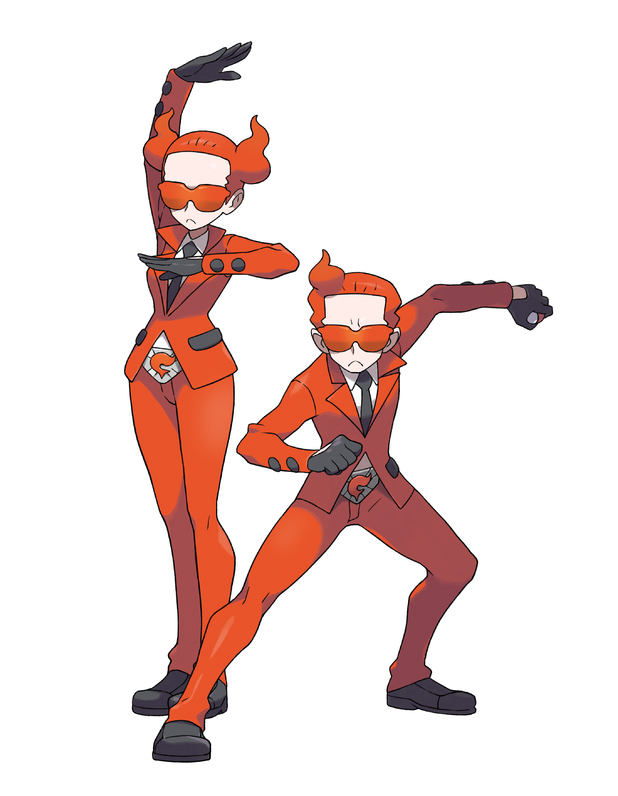 |
| Ugh. Just look at these morons |
Like every other game in the main series, there are eight gym badges that you must collect in order to challenge the Elite Four. But, also similar to other games, is that somewhere along your journey of challenging gym leaders you encounter the region's local criminal organization. In the case of Pokémon: X and Y's Kalos region, you are forced to deal with what I think everyone could agree is the WORST criminal organization the series has ever introduced. When I say 'worst', I'm not saying in terms of the degree of heinousness, I really mean that they're just a stupid group.
The group I am referring to is the highly arrogant, and self-describedly 'fashionable' Team Flare (though, shouldn't it be Team Flair?): an entire organization of rich, young adults in hideous bright-orange suits. Like most game's plots, they are somehow involved with the game's mascot pokémon, which will be either Xerneas or Yveltal depending on the version chosen. I won't disclose exactly how they are involved, however, in order to protect you from spoilers.
I won't go into detail about the overall plot, either, but I will say that it is kind of strange, and doesn't make a whole lot of sense to me. I get the gist of what's going on, but the way things are presented can really be quite weird. For example, there is literally a fifty-foot tall, 3,000 year-old homeless man who once built a death-ray out of a giant crystal... Or something. Yeah.
In other words, the overall plot of the game wasn't all that good. This didn't really make the game any less fun, however, and the histrionic silliness of Team Flare was even good for a few laughs along the journey, so don't let all this dissuade you from trying the game out for yourself.
Also involved, not just in the plot, but just in the life of the player, are four friends that you intermittently come in contact with throughout your journey. One of these friends is the base version of the opposite gender of the character you pick; i.e., if you're a boy, the girl character takes on this role, and vice-versa. This particular person becomes your rival, and you battle them every so often. They don't take on the antagonistic rivalry role like the infamous Gary (or as I'm sure all of us have named him, 'Assfuck', 'Cuntwad', etc...), but more of a 'friendly competitor' type schtick.
The other three friends are set no matter what gender you pick (I did a playthrough as both genders, so I know this for sure). Since I found these characters to be slightly interesting for some reason or another (usually they are somewhat silly reasons), I'll take a moment to brief you on them:
- Serena/Calem - Your friendly neighborhood rival. Apparently raised by 'master trainers', (s)he has this determination to be the best trainer in the group. As such, (s)he challenges you throughout the game. Also gets caught up somewhat in the plot. Regardless of what gender they are, (s)he will have the same dialogue and personality (far as I could tell, anyways). Personally, I just found it more fitting when they were female, but not for any super-particular reason.
- Shauna - Packaged as the group's 'cute one', she maintains her role as resident sweetheart, but will get annoying really quickly. A better description of her is that she is a needy, immature little girl who you have to babysit throughout your quest. It should also be noted that if you play as a boy, her dialogue is slightly different. It would be erroneous to say that she flirts with you, but, she does some sort of weird, elementary-school-aged version of that. I'm sure it must've been exciting for Pokémon's target demographic to experience that, but I would be old enough to face criminal charges if I were into kids her age.
- Tierno - An unhealthily obese, happy-go-lucky kid who has a dream to lead the World's greatest pokémon dance troupe (I couldn't make this shit up). You get to fight him a couple times, but he's pretty weak. He'll admit this, though, and just remind everyone else that he'd rather be a dancer than a trainer. He'll even sometimes do a little pirouette when you talk to him (like I said, I just couldn't make this up). If you play as a girl, you will find that Shauna no longer flirts with you, but instead, THIS GUY DOES (It didn't help that my name was 'Jenny Taylia'). Since I don't have a fragile sense of masculinity, I didn't really have a problem playing as a girl, aside from that this weirdo was after me. Yikes. I would highly recommend that you play as a boy, regardless of what your actual gender is. The things I've seen, man...
- Trevor - Of course, every group of friends has to have the quiet, ginger nerd who's half everyone else's height and has hair that looks like a pumpkin. He doesn't really say much (aside from these couple instances where he says something really deeply emotional, accompanied by The Incredible Hulk-caliber sad piano music), and is more interested in filling his Pokédex than battling. But he will issue his own sort of battle of 'who has more pokémon registered on their Pokédex?' He is not very good. I beat him with seven once.
 |
| Yup. The guy on the left is Tierno. Imagine that thing hitting on you! |
 |
| Be as effeminate as you want, boys! |
On top of having all these other characters, they add one more character than normal... You! Well, sort of. In past games, the player character feels like little more than a clump of pixels that you move around and what not. In X and Y, they actually let you be slightly more than that. What I'm taking about, is moderate aesthetic customization. It's not a whole lot, but you get to at least choose skin, hair, and eye color, plus you can change your hairstyle during the game and change your clothes.
 |
| There's about ten million different options for girls |
The Kalos region, being as based off of France as it is, adds a new type of store called a 'boutique' into a handful of towns. You go there to buy clothes, and there's actually quite a bit of styles and options that you can mix and match to your pleasing. Of course, girls have about ten times as many options as boys, though.
As for hairstyles, there only seems to be one place where you can get these altered. There's also about ten times as many options for girls than there are for boys, though, but would you really expect otherwise?
...
A couple of other new features are Pokémon Amie, and Super Training. Both are very useful.
| Even Gengar is cute in Pokémon Amie! |
Pokémon Amie is basically bonding with your pokémon. It adds a very personal aspect to the game, and it makes cute pokémon about a thousand times cuter. Basically, you get to pet your pokémon, feed it 'poképuffs', and play minigames with it (a couple which are crack-tier addicting). Basically, you do this to raise a pokémon's affection levels (COMPLETELY separate from friendship levels; will not affect the strength of Return, etc...). When their levels are maxed out, they perform better in battle by landing more critical hits and evading more often. Fairly useful, and takes roughly an hour per pokémon to max out their affection. It would be wise to utilize this tool, even if petting more badass pokémon just doesn't feel... right.
Super Training is the most useful tool for lazy trainers such as myself who still want strong pokémon. Basically, it's another series of minigames, but completing them raises your pokémon's EVs! It's SOOOOOO much less time consuming than searching for pokémon that yield desired EVs and avoiding ones that don't. Seriously. This is a lifesaver. Give whoever decided to put this in a freakin' medal.
...
Now, let's talk about a couple things that you may have already heard about the game. First, is the addition of the new Fairy typing. It... wasn't really necessary, not to mention that it hardly makes any sense. Plus, it utterly disrupted the metagame for quite some time. Here's a table of its strengths and weaknesses, from Bulbapedia.
 |
| Via Bulbapedia |
The most notable thing about this type is that it not only is super-effective against Dragon type offensively, but defensively it is IMMUNE. If you go into the game not knowing this, you can be in for some surprises.
Another new feature added in this generation is the almighty mega-evolution; a feature that allows certain pokémon to temporarily evolve an extra time during an individual battle. They don't evolve into a completely new species, however, but they do change into a FAR more badass version of themselves (except for Gyarados...), and get a nice stat-boost as long as the mega-evolution is in effect.
Another new feature added in this generation is the almighty mega-evolution; a feature that allows certain pokémon to temporarily evolve an extra time during an individual battle. They don't evolve into a completely new species, however, but they do change into a FAR more badass version of themselves (except for Gyarados...), and get a nice stat-boost as long as the mega-evolution is in effect.
 |
| Mega-Gyarados: a friggin' jumbo shrimp |
Also, one should keep in mind that in order for a mega-evolution to be able to work, the pokémon intended to evolve must be holding its respective mega-stone. Each pokémon that can evolve this way needs to be holding it in battle. You will encounter a couple of these stones automatically throughout the game, but some you will need to find out in the open. Most of them are available to be found only from 8:00-9:00 p.m., as well, for some odd reason.
...
Like every other generation, there was also a handful of new moves added. There were naturally a few Fairy type moves added, but none with particularly interesting effects. Most of the other types were rather boring and not even worth discussing, but there are a few that I will go into detail about:
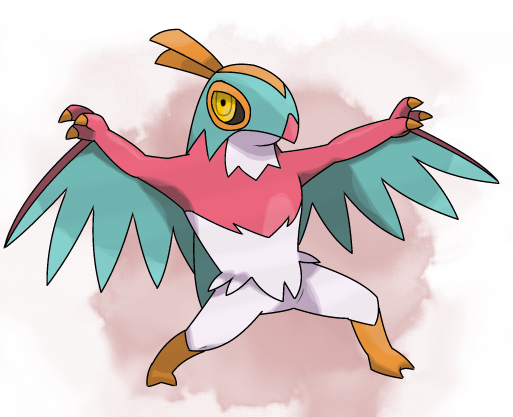 |
| Hawlucha: a luchadore hawk |
- Flying Press - This is the signature move of the new Flying/Fighting type pokémon Hawlucha. The interesting thing about this attack is that it counts as both a Flying and Fighting type move, to compliment Hawlucha's interesting typing.
- Spiky Shield - Signature move of Kalos Grass type starter's final form Chestnaught. Works like Protect or Detect, but also causes damage to any pokémon making direct contact.
- King's Shield - This move is similar to Spiky Shield, but instead of dealing damage, it lowers the aggressor's attack stat. Signature move of Steel/Ghost type Aegislash.
- Freeze Dry - An Ice type move that counts as super-effective against Water types.
- Forest's Curse - This is the signature move of Trevanent, a new Grass/Ghost type pokémon. It adds Grass typing to the target.
- Trick or Treat - This move is essentially the same as Forest's Curse, except instead of Grass type, the target becomes ghost type. It is the signature move of Gourgeist, another Grass/Ghost type.
 |
| Pumpkaboo and Gourgeist |
On top of new moves, there are also a few new abilities, a few of which have rather interesting effects:
- Aerilate, Pixilate, Refrigerate - Changes all Normal type moves used by the user to Flying, Fairy, and Ice types, respectively.
- Protean - The user changes type based on the move it uses. For example, if it uses, say, Flamethrower, it becomes Fire-type. This ability can be used to strategically avoid type weaknesses, and gives every single move STAB.
- Stance Change - Defining feature of Aegislash (remember this one? Quite an interesting new species). This changes Aegislash's form (from a sword form, to a shield one), and also stats, depending on whether the move it uses is offensive or defensive.
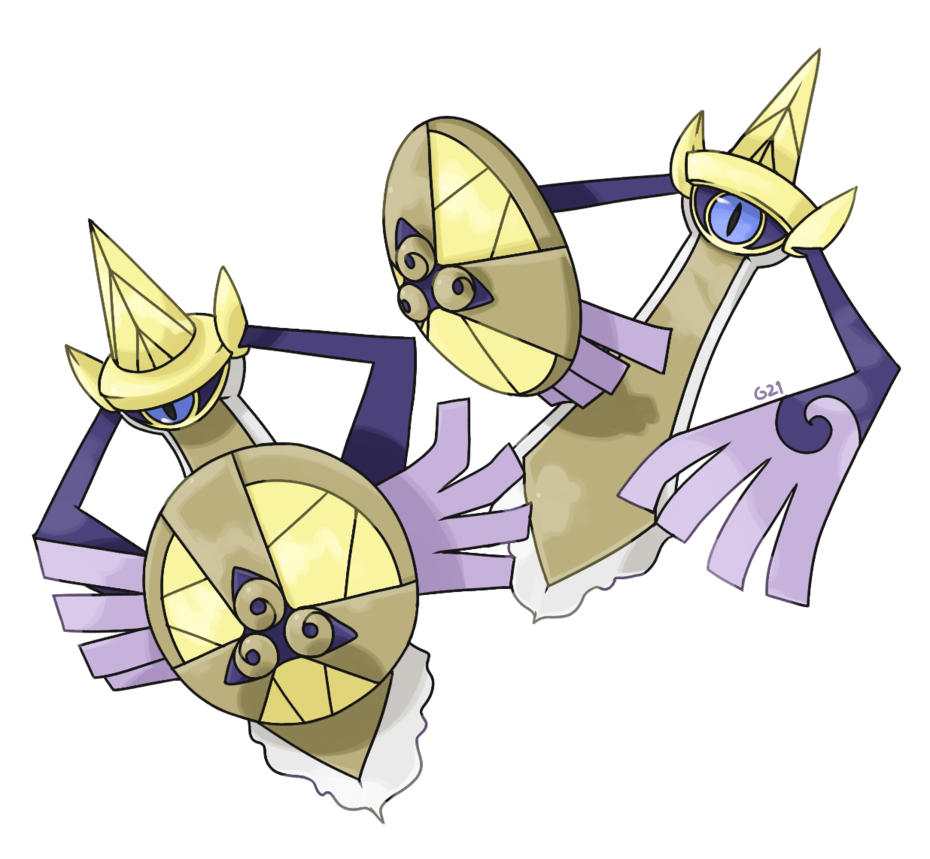 |
| Aegislash's two forms |
The last specific thing I'm going to discuss is the Online features. There's not a whole lot of things worth mentioning save a couple of exceptions, namely 'Wonder Trade' and the 'Friend Safari'.
First off, the Wonder Trade is some of the most fun you'll have in the game. What you do, is you offer a pokémon - any pokémon that you own - up for trade. The Internet finds you a match, and a trade happens. The interesting thing about all this, though, is that you are matched up completely at random. You can get ANYTHING that is available in the game. It's all up to chance... For example, you can send out a Bidoof and get a Beldum or Larvesta! But conversely, somebody's sending out a Beldum and Larvesta and getting a Bidoof in return. So it really is a gamble. But in my personal experience, I got decent finds often enough to more than make up for the disappointing Bidoofs and Zigzagoons. But, no matter what you get, ALWAYS look at them carefully. I almost sent away a Cascoon I received until I noticed that it was
Remember the Safari Zone? Pepperidge Farms remembers, and so do I. And, while, Pokémon X and Y don't have a Safari Zone in the traditional sense, they DO have the Friend Safari. Basically, you collect friend codes by becoming friends with people over your 3DS, and then if they have Pokémon X and/or Y, they will 'give' you a section of a Safari (that made it sound more interesting that it really is; it's just a square of grass). In that section, you will find exactly 3 pokémon of a specific type. Usually, they suck (mine happens to be Fighting, with Machoke, Meinshao, and Hariyama, I think...), but other times, there can be some great finds (a friend of mine has a Fire one, containing Larvesta!) That's really all there is to it. There are a lot of online communities that trade friend codes, and you can probably find some interesting species there.
...
All in all, this is a great game. It might come as a bit of a disappointment to some, however, just because it's such a departure from the style of previous games. But, I think it's really just an evolution of style. We'd be getting pretty bored of the series if it was the same old thing every single generation. So, I urge you, just give it a try. It may be a little off-putting to some, but I think it's easy to grow into once you give it a chance.
So, to wrap it up...
Pros:
- Brand new type of gameplay is well done
- There are finally options for character-customization
- Graphics are PHENOMENAL
- Wonder Trade is awesome
- Mega Evolution is also awesome
Cons:
- Brand new type of gameplay might be off-putting at first
- Team Flare is stupid
- There's a very small amount of new pokémon species
- Fairy type doesn't make any sense
- And, the most severe con of all, Tierno flirts with you if you're a girl
/XenoJesus
Unless stated otherwise, all images taken via Google Images, since this IS the Internet. If you own the rights to any of the images in this post, please contact me at xenogzus@gmail.com and request their removal. I'll happily comply to any reasonable demands regarding this.
Wednesday, November 13, 2013
[GAME REVIEW] Audiosurf - 9/10
The first game I am
going to review is Audiosurf. It is an indie game released in 2008 that has
gained a fair amount of attention since its release. It’s a music game similar
to Guitar Hero but with no buttons, and instead of hitting buttons on time,
you're matching colors by moving along the bottom of the screen. You have three
rows that can hold seven blocks, and the goal is to match three blocks of a
kind together, touching in any way. If you overflow a row with more than seven
blocks, you are penalized. It is a score based game with online leaderboards
for those looking to compete. The music however is whatever music you so choose
to play. It can play any audio file, as far as I can tell.
For controls you can use
keyboard arrow keys, a mouse, or a gamepad. Of the control types, I found that
a laptop's mouse pad worked the best for me because the way the mouse moves is
the most fluid and controlled of them all. There is a bonus to using my finger
movement as opposed to wrist movement. I'd have to say the gamepad came second,
only because the strange setup. When using a gamepad, you use the joystick to
move left or right just like a mouse, but it re-centers in the middle row every
time your hand is off the joystick. Third is a regular mouse, just because I'm
faster with finger movement than wrist movement. The arrow buttons however are
very hard to adjust to unless you are a fast clicker. Otherwise you have to
click to move a row every time which can get frustrating. Overall, a gamepad or
the laptop mouse pad are your best bets, especially while under the influence.
My first time playing I
was stoned off my ass. When I'm stoned I love music. I also enjoy video games
when I'm stoned. This game delivered both in a package that was intense as
hell. My mind was blown by the colors and the music syncing up. However if you
aren't great with fast reflexes or with fast thinking while under the
influence, I recommend only playing this game on its mono setting (one color
changing block and grey blocks which reset the multiplier on your score).
Personally I think the mono setting is better for being stoned because the
blocks still change color in sync with the tracks speed color. The calm purples
and blues during the slow, more peaceful parts really made it feel quite
calming. Then during the red, faster parts my brain would almost snap into
hyper-focus because the warm, bright red seemed alarming. The track moving
along in beat, such as stopping for a moment on the beat of slower parts, made
me feel like I was a part of my music. Any type of music you like you can
play and it will be amazing stoned. The visuals are also trippy. Random objects
are in the background, such as a random spinning top. They add an effect of
trippy-ness but don't steal focus from the road. Also if you so desire you can
add visual effects (such as negative, rusting, and even changing the color of
the blocks to fit your style) and audio effects (for when you hit the blocks)
in the menu, and you can change these settings during the game if you want to
mess with it for a more trippy experience.
Playing sober is a
slightly different experience. There is more depth and challenge to the game.
The other modes involve the blocks being multiple colors, and each color has
more value than the others (purple being the least while red is the most). Each
mode has slightly different abilities, such as eraser mode which can erase
blocks you have while vegas mode can shuffle them around. For more of a
challenge there is an extra mode called iron mode. With this checked if you
overflow a row it ends the game, as opposed to the regular consequences. There
are also extra bonuses at the intervals of 7, 11, and 21 block combos. The game
does a good job of adding bonuses here and there to make playing more
interesting. Each mode contains different options, but they are all pretty much
the same, except for mono and the multiplayer mode.
Multiplayer in this game
is shit. There’s no way other way to put it. For starters its local, which on a
pc is never easy and with a laptop pretty much impossible. One player uses a
mouse, while the other uses the arrow keys to navigate through 2 rows instead
of three, and the rows are linked between characters. A multiplayer, it just
does not function well. However, as an extra challenge for one person, it is a
great challenge to take on.
The graphics on this
game are not so great. It can run on my laptop, which can't run games released
before Audiosurf. Games like this don't rely on graphics that much as a selling
point, and, for what the game is, the graphics are perfectly adequate. The road
shows what it needs to; the hover-car-thing is on par with some of the F-zero’s
cars. The trippy objects floating in the background look almost better at the
last game generation's graphic quality.
The sound on this game
is great. Of course, it is your own music, but the quality is still there.
Unfortunately, that means if you have shitty audio on the files to start, it
will stay shitty. Also, m4a files need something specific done with them to
make them work, but other than that the sound quality is up to your music and
music choice. The Orange Box game soundtrack comes with the game too, for those
of you who do not own music. If you do not own music though, why are you
thinking of buying/buying this music game anyway? It seems rather...strange.
One cool thing The Orange Box has is that on the Portal soundtrack, the car
becomes a portal gun, and there are only orange and blue blocks regardless of
mode.
Overall if you are a
stoner or into rhythm games (seriously stoners, this game was made for you) I
highly suggest buying this game. You can play it for hours and still not be
bored. I find it particularity productive for listening to new albums I've
acquired. However, if you are big on your games having a story line or plot,
this might not be the best game for you. Over all I give it a 9/10 for a rhythm
game.
Pros:
- your own music
- no game-breaking bugs or any bugs that will effect
enjoyment of the game.
- easy to learn, hard to master
- game-play is solid
- simple, but not too simple
- can add visual and audio effects
Cons:
- graphics sub-par
- gets boring unless your stoned or really into music
*Video coming soon
Subscribe to:
Comments (Atom)